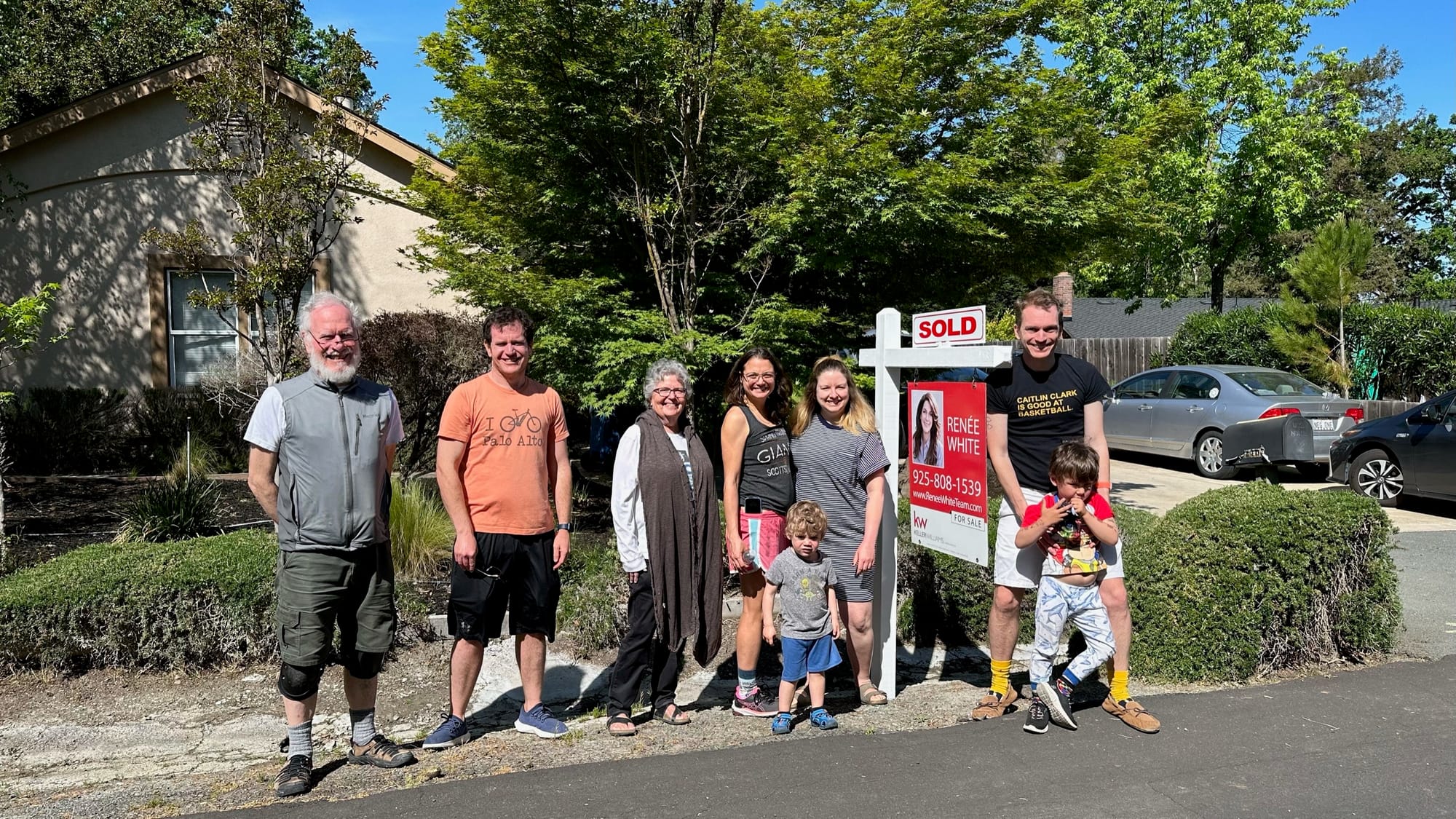
On March 25th, we’re hosting a webinar in partnership with YIMBY Action to discuss California compound laws and how you can use them to build your own compound. Register here!
The basics:
Location: Walnut Creek, California
# of residents: 8
The setup: One single-family home, split three ways, an ADU, and a guest apartment on half an acre of land
Leora Tanjuatco Ross is the California Director at YIMBY Action, a network of people advocating for abundant, affordable housing and inclusive, sustainable communities across the United States.
Her team’s work focuses on increasing housing density and affordability in California. Recently, they’ve seen success with laws like SB9 and SB 684, which make it easier to add more homes to existing lots.
Leora also has first-hand experience with these laws and family compound living: she lives on a compound in Walnut Creek with her husband, two children, brother and sister-in-law, and her in-laws. Here’s how they did it and what compound life is like for them.
The story
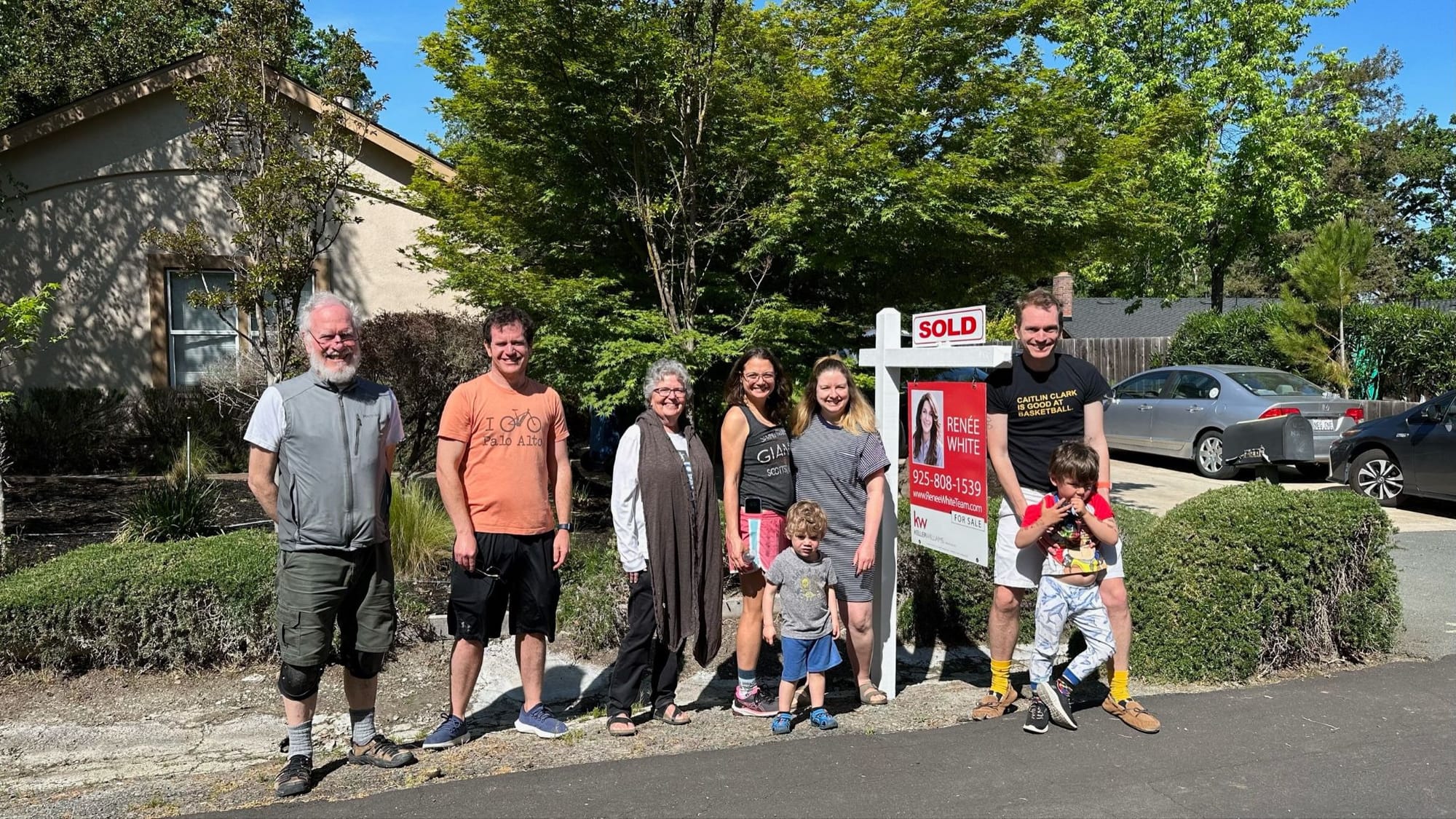
In 2020, Leora, her husband, their newborn, her brother and her sister-in-law were living with their in-laws when COVID-19 hit. Suddenly, with six people working from home, living together in a single-family house felt unsustainable.
“And all of a sudden, there are six adults on Zoom in the living room at once. My husband would go out in the driveway and do his calls. And we were just like, oh, no…this is not realistic.”
Her husband started to joke about starting a compound, but Leora actually liked the idea. Why don’t they all just buy a property together? Get a large lot, split the costs, and create a place where they could live affordably?
The group already knew they liked living together, and with a combined budget, they could choose a space that was actually comfortable. Although the arrangement sounded good on paper, Leora didn’t think it would actually ever come to fruition.
Leora and her husband ended up moving to a condo in Mountain View. They loved the town—it was walkable, with an active community. But after the birth of their second child, they realized they wanted more space and a yard. The idea of living on a compound was brought up again. Except this time, it was serious.
But finding a property for multiplayer living on your own through traditional real estate sites isn’t easy. (The Live Near Friends property finder wasn’t available back then!)
Eventually, they found a hidden gem: a single-family home with a Junior ADU (JDU), an apartment over the garage, and 15 fruit trees on half an acre of land. Leora’s brother and sister-in-law visited the property, and the group placed an offer after only three days.
A blend of community and privacy
After purchasing the property in Walnut Creek, Laura and her family built another ADU on the lot. As California residents, they could have pursued a lot-split with SB9 (a law Leora worked on!) to build another single-family home.
But building an ADU was much faster. They were even able to fast-track development by making the property 799 square feet—1 square foot under the size that requires additional design review and neighbor approval.
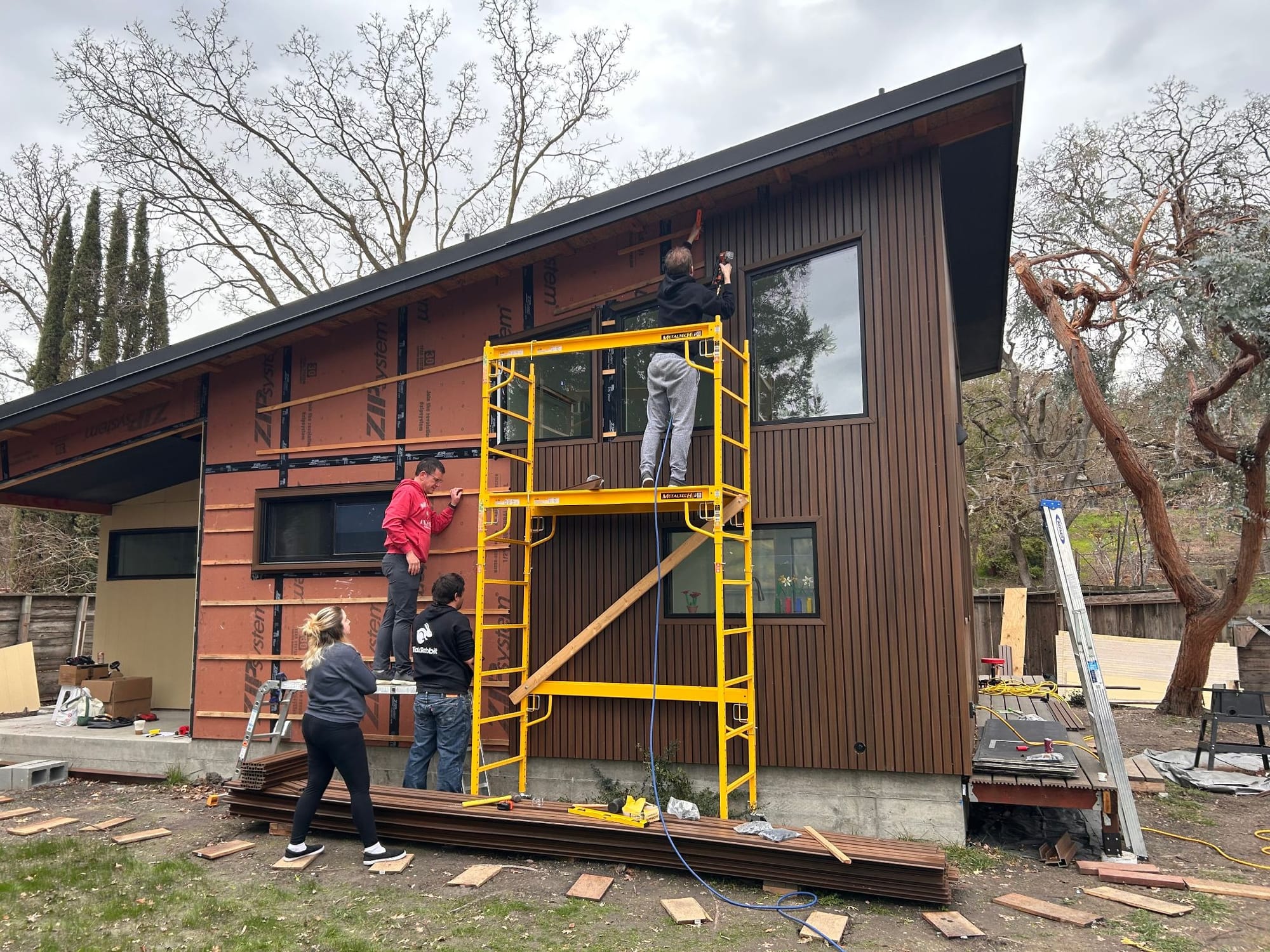
Leora’s background in architecture helped her configure the space for privacy and community. Three families live in the main house, and one family lives in the ADU. The apartment above the garage is used as a space for guests when they visit.
Each family has their own private decks at the “dead ends” of their space in the main house. The kitchen and living area are shared, and they eat dinner together twice a week.
Outside, the group has a play area and a firepit, and they’re planning to add a cold plunge and a sauna eventually.
Navigating complex decisions
Leora’s compound squad ran into a common problem early on: they were unable to come to a consensus on cost-sharing for renovations or additions.
For example, if one person wanted to renovate their bathroom, who was responsible for chipping in? Since all residents have a stake in the property, all investments could raise the property value, even if they didn’t meaningfully benefit everyone in the compound.
The group landed on a straight-forward, two-part solution. First, they decided that the compound would go to their kids. This eliminated conversations about resale value and individual equity.
Then, they decided that improvements over $10,000 that benefit the compound as a whole require group approval and cost sharing. If an investment is private (like renovating a bathroom), the responsibility falls on the person it benefits.
These are the conversations and decisions that make living near friends and family unique. They require a different approach to thinking about property—one that doesn’t always have clear guidelines. The benefit is that, within legal reason, you have the power to decide how your compound operates.
Compound living in California and beyond
Leora lives in California, where compound laws like ADUs, SB9, SB 1211, and SB 684 make buying and building shared properties more feasible than in other parts of the country.
In her work as the California Director at YIMBY Action, Leora and her team work to make these laws more common, increasing the availability and legal possibility of density-driven housing for people in California and across the country.
If you’re interested in learning more about California compound laws and how to use them to buy or build your own compound, we’re hosting a webinar with Live Near Friends founder Phil Levin and YIMBY Action on March 25th at 1 pm PT. Register here!

To learn more about YIMBY Action and get involved, sign up for their email list.